
Shifting North American auto policy gives China the upper hand
Share
Lana Payne Toronto Star oped
As the Trump Administration continues its nonsensical tariff attack on Canada’s auto industry, it is becoming increasingly clear the only winner in this trade war is China.
News that Stellantis intends to build some electrified Jeep vehicles in China, with plans to export them around the world including Canada, is another gut punch to Unifor members at the Brampton Assembly Plant and the Canadian auto industry.
The Jeep announcement came quietly, on September 24, delivered by Lü Haitao, the General Manager of a joint venture between Stellantis and automaker Dongfeng, a Chinese partner. Reports suggest Chinese Jeep production will begin in 2027.
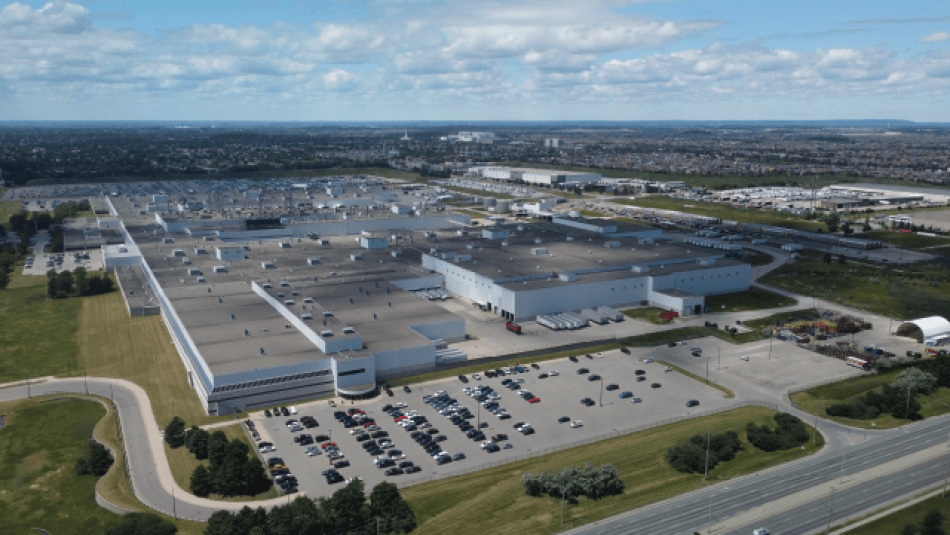
This decision fails on several fronts. Stellantis’ idled Brampton Plant was slated to build the next-generation electric Jeep Compass for the North American market, employing tens of thousands of workers in Canada and across the continent. That’s before Trump’s tariffs hit Canada, and before Stellantis tried to cut and run.
The tragedy for North American autoworkers is not one of those electric Jeep Compass vehicles promised to Brampton, and subsequently promised to a plant in Illinois, are currently being built. And if I was placing a bet, I’d say they never will be.
Tariffs have eroded the business case to build affordable cars in North America. At the same time, Trump’s climate policy rollbacks have weakened EV demand, encouraging automakers to pivot production to gas and diesel, just as his foreign wars are driving up fuel prices.
By engaging in a pointless trade war, tens of thousands of potential jobs for Canadian and American autoworkers are lost – crushed by the uncertainty caused by U.S. tariffs.
In the end, guess who wins? China.
The Stellantis-Dongfeng announcement is further proof.
Rather than build electric Jeeps in Brampton, with component parts sourced throughout North America, the automakers would rather import these vehicles from Wuhan. No North American content. No jobs.
It is very possible these China-made Jeeps won’t find their way into American showrooms, because the U.S. won’t allow it.
Prohibitive U.S. tariffs of more than 100% on Chinese EVs remain in effect. The U.S. is also implementing rules that ban advanced Chinese vehicle technology from entering the domestic market. Both policies have merit and were initiated under the Biden Administration. They were conceived alongside aggressive EV investment incentives to boost local production, support factory transitions and build the vehicles of the future, while guarding against China’s push to dominate global EV sales. For a time, Canada supported this strategy to protect the North American and Canadian auto industry.
But then came Trump’s trade war, and Canada shifted gears. The federal government revised its auto strategy, attempting to move us closer to China. Canada withdrew temporary import prohibitions and now allows for the purchase of an ever-increasing number of Chinese EVs. All premised on the false hope we’d entice meaningful Chinese automotive investment here at home. But anyone with knowledge of the global auto industry understands China has little incentive to invest.
Part of the reason EV Jeep production is being sourced to Wuhan is because China is looking to maximize its own over-sized production capacity. Domestic car sales in China are on a severe downswing. To keep assembly plants running, Chinese automakers are looking to further boost exports. That doesn’t bode well for Canada, or any other automaking nation.
Competing with China’s massive state subsidies, deeply guarded intellectual property, and objectionable labour standards, is a fool’s game.
If the Stellantis-Dongfeng plan proceeds, Canadians might end up buying electric Jeeps made in China, while our union fights to prevent Stellantis from closing the Brampton plant that should have been building electric Jeeps for North America.
Should China-made Jeeps land in Canadian showrooms, they will symbolize every industrial policy mistake that is undermining the success of North America’s auto sector, and its autoworkers, since Trump took office. While China takes a victory lap.